- Farming News, Jobs, Machinery & Agricultural Magazine for the North West
- 01625 529 900
Main Menu
Main Menu
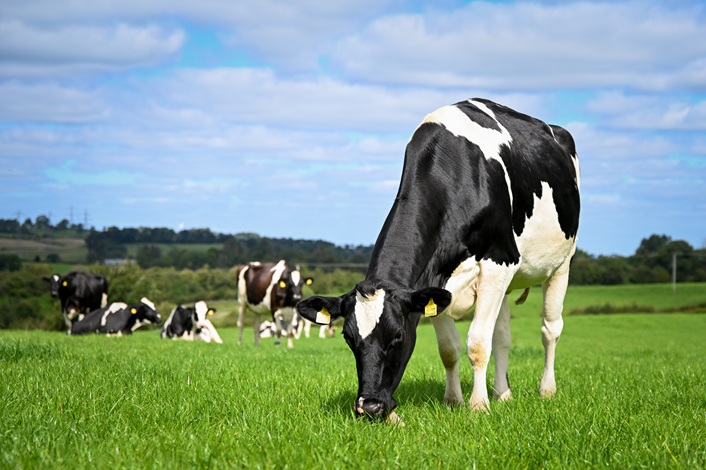
With milk prices under pressure and margins tightening, many dairy farmers are focusing on maximising milk from grass. However, the transition from winter diets to grazing must be managed carefully to maintain cow health and performance.
Managing diet changes at turnout is key to optimising rumen function and avoiding production setbacks, says Dr Colin Byrne, ruminant technical and deployment manager at Lallemand Animal Nutrition.
“With milk prices where they are, farmers are understandably looking to make the most of lower-cost feeds like grass,” says Dr Byrne. But the move from winter diets to grazing can cause rapid changes in the rumen environment if it isn’t managed properly.”
Fresh grass differs significantly from conserved forage in terms of fibre levels, sugar content and fermentability. These differences can disrupt rumen microbial balance and increase the risk of sub-acute ruminal acidosis (SARA), which can reduce feed efficiency and cow performance.
“When cows move from a conserved forage diet onto lush grass, the rumen microbial population needs time to adapt,” he explains.
"Rumen pH is everything,” continues Dr Byrne. “To ensure efficient rumen fermentation, the rumen needs to remain above pH 5.8 to maintain a stable microbial environment. Lush spring grass ferments very quickly in the rumen, which can cause pH to drop if cows aren’t properly adapted.”
Introducing a rumen-specific live yeast ahead of and during the grazing season can help support cows through the dietary transition.
“It helps cows cope with dietary changes at turnout by supporting fibre-digesting microbes and stabilising rumen pH,” he says.
Research has shown that cows fed diets containing the rumen-specific live yeast Saccharomyces cerevisiae CNCM I-1077, known as Levucell SC, spend significantly less time under SARA.
In trials, rumen pH dropped below the critical threshold for around 240 minutes per day on control diets, compared with just 78 minutes per day when the rumen-specific live yeast was included1.
But good grazing management remains essential, according to Dr Byrne.
Gradual turnout is still best practice when introducing cows to grazing, allowing the rumen microbiome time to adapt.
“Most dairy farmers want cows out at grass day and night as soon as possible, particularly when they are looking to maximise milk from forage,” adds Dr Byrne. “But protecting rumen function ahead of turnout helps minimise production blips and keeps cows performing consistently.”
For herds supplementing grazing diets with concentrates, Levucell SC TITAN can be incorporated into compound feed formulations to ensure live yeast stability, providing an additional tool to support rumen function during periods of dietary change.
Share this post

Follow us on Instagram
Request a free monthly Farmart Magazine.